AI
Top 9 Use Cases: How AI Agents Are Helping the Legal Industry
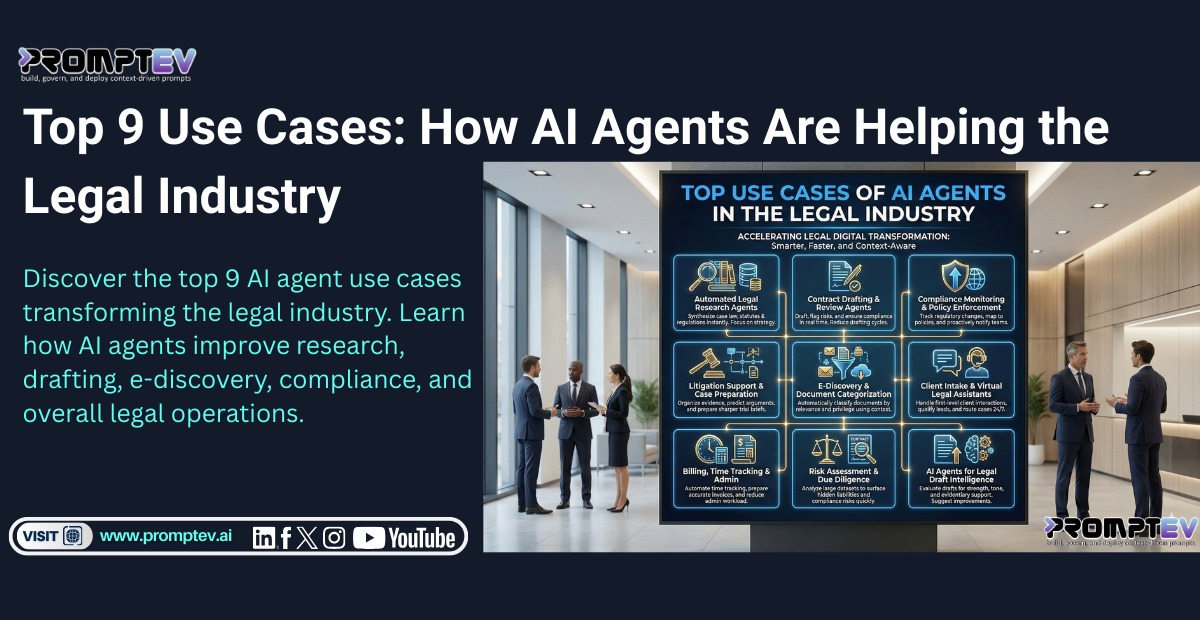
The legal industry is undergoing one of the fastest digital transformations in its history. As firms face growing case volumes, rising client expectations, and pressure to reduce operational costs, AI agents are becoming essential. Unlike traditional automation tools, AI agents don’t just “process tasks” — they understand context, follow legal workflows, and make intelligent decisions in real time.
Nowadays, law firms, corporate legal teams, and compliance departments are using AI agents as a force multiplier.
Below are the top 9 real-world use cases leading the change.
1. Automated Legal Research Agents
Legal research is one of the most time-consuming tasks in law. AI agents now instantly scan statutes, case law, regulations, and precedents.
They don’t just retrieve documents; they synthesize arguments, highlight conflicts, and provide case summaries. This reduces research hours and allows lawyers to focus on interpretation and strategy rather than information hunting.
2. Contract Drafting & Review Agents
AI agents can draft first versions of contracts, flag risky clauses, compare against previous versions, and ensure compliance with firm standards.
They can also instantly highlight:
- Missing terms
- Non-standard language
- Jurisdiction-specific risks
- Ambiguous wording
These agents are moving inside document workflows, where they shorten drafting time.
3. Compliance Monitoring & Policy Enforcement Agents
Regulations change frequently, and compliance teams struggle to keep up. AI agents now track regulatory updates, interpret changes, and map them to internal policies.
They proactively notify teams about:
- New compliance obligations
- Potential violations
- Required policy revisions
This shifts compliance from reactive to predictive.
4. Litigation Support & Case Preparation Agents
AI agents assist litigation teams by organizing evidence, generating case chronologies, predicting opposing arguments, and preparing trial briefs.
They can analyze thousands of documents and create structured insights that previously required weeks of paralegal effort. Litigators now enter courtrooms with sharper preparation and deeper insight.
5. E-Discovery & Document Categorization Agents
E-discovery is expensive and overwhelming. AI agents automatically classify emails, PDFs, chats, and images based on relevance, privilege, and risk.
They understand context and can identify sensitive data hidden inside large document sets. This reduces review workloads and improves accuracy in high-stakes cases.
6. Client Intake & Virtual Legal Assistants
AI agents handle first-level interactions with clients, helping firms qualify leads, collect necessary details, route cases, and prepare initial summaries for attorneys.
They reduce manual admin work and provide instant availability, improving client experience from the first contact.
7. Billing, Time Tracking & Admin Agents
Administrative tasks drain attorney productivity. AI agents now automatically track time, prepare billing summaries, draft invoices, and identify errors or compliance issues in billing entries.
This ensures more accurate records and faster billing cycles, especially for large firms managing thousands of entries.
8. Risk Assessment & Due Diligence Agents
During M&A, investments, or corporate transactions, AI agents analyze large sets of documents, financials, regulatory filings, and contracts.
They surface:
- Hidden liabilities
- Conflicting obligations
- Compliance risks
- High-impact anomalies
Lawyers get a structured due diligence summary within minutes instead of weeks.
9. AI Agents for Legal Draft Intelligence
These agents help lawyers strengthen arguments by evaluating drafts for legal strength, tone, clarity, and evidentiary support.
They can:
- Suggest stronger precedents
- Identify logical weaknesses
- Improve structure and clarity
- Align drafts with the firm’s approved style
This creates more consistent and high-quality legal documents across the organization.
Conclusion
AI agents are no longer experimental tools in the legal industry; they are quickly becoming essential infrastructure. From research and drafting to compliance, e-discovery, and litigation support, these agents are transforming how legal teams operate. They remove the bottlenecks that slow attorneys down, reduce operational costs, and improve accuracy across every stage of legal work. For forward-thinking teams using platforms like Promptev, AI agents are becoming a competitive advantage — enabling faster, smarter, and more reliable legal operations.
Instead of replacing lawyers, AI agents amplify their capabilities. They handle the repetitive, data-heavy tasks that consume time and introduce human error, allowing attorneys to focus on strategy, client relationships, negotiation, and high-value decision-making.
As regulations evolve, client expectations rise, and data volumes explode, the legal organizations that thrive will be those that integrate AI agents at the core of their workflows. The future of law isn’t just digital, it’s intelligent, automated, and agent-driven.
FAQs
1. How are AI agents used in the legal industry?
AI agents automate research, contract analysis, compliance monitoring, e-discovery, billing management, and litigation support. They act as intelligent assistants that understand legal workflows, not just simple automation.
2. Are AI agents accurate enough for legal work?
Yes. Modern AI agents use context-aware retrieval, rule-based constraints, and firm-specific knowledge to ensure reliable and compliant outputs. They reduce human error in repetitive tasks.
3. Can AI agents replace lawyers?
No. AI agents assist lawyers by handling repetitive, time-consuming tasks. Strategic decision-making, negotiations, courtroom advocacy, and legal interpretation still require human expertise.
4. How do AI agents help with contract drafting and review?
AI agents detect risky clauses, compare versions, highlight missing terms, and follow jurisdiction-specific standards. They reduce manual review time and improve consistency across documents.
5. What is the biggest benefit of using AI agents in legal operations?
The biggest benefit is efficiency. AI agents drastically reduce time spent on research, drafting, e-discovery, and admin tasks—allowing legal teams to focus on strategy, clients, and high-value work.

Faisal Saeed is Founder & CEO of promptev, building next-gen context engineering infrastructure that enables teams to orchestrate, scale, and deploy production-ready generative AI systems with confidence.